/Card-Page%20Previews-AI.png?width=1200&height=800&name=Card-Page%20Previews-AI.png)

Everything You Need to Know About eSigning
Electronic signatures let people and businesses sign documents online instead of printing, scanning, or mailing paperwork. They're legally binding in most countries under laws like the ESIGN Act, UETA, and eIDAS, provided requirements like signer intent and consent are met. Nitro Sign lets teams send, sign, track, and store electronic signature workflows securely from one platform, with support for encryption, audit trails, and identity verification built in.
This guide explains how electronic signatures work, how they differ from digital signatures and wet signatures, when electronic signatures are legally binding, and the security, compliance, and identity verification requirements organizations should understand. You'll also learn how Nitro Sign helps businesses send, sign, track, and manage secure electronic signature workflows.

What Is An eSignature?

How Do eSignatures Work?

Wet vs. Electronic vs. Digital Signatures

How Do I Get Started eSigning?

Are eSignatures Legally Binding?

How Secure Are Electronic Signatures?

Why Do Businesses Choose eSignatures?

eSignature Use Cases

Explore More eSign Resources

Glossary of Electronic Signature Terms

What is an eSignature?
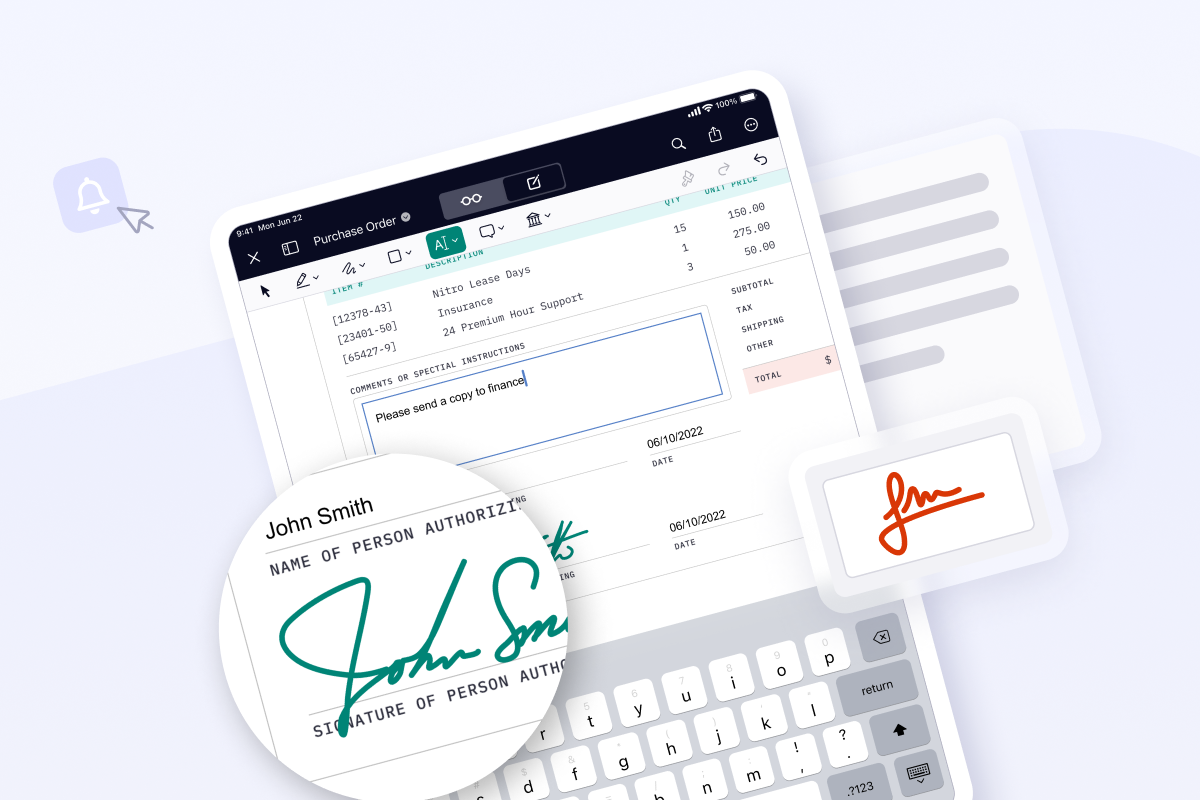
An electronic signature (eSignature) is a digital method of indicating agreement or approval on an electronic document. In many jurisdictions, electronic signatures have the same legal effect as handwritten, or “wet,” signatures when they meet applicable legal requirements.
Electronic signatures allow individuals and organizations to sign documents from computers, tablets, or mobile devices without printing or scanning paperwork.
Nitro Sign helps users send documents for signature, track signing progress, and maintain records of completed agreements from a single platform.
Common benefits of electronic signatures:
- Sign documents remotely
- Reduce paper-based processes
- Track signing status digitally
.png?width=1200&height=1200&name=Header-Nitro%20Sign%20(SEM%20Retargeting).png)
How do electronic signatures work?
How do electronic signatures work?
Electronic signatures work by recording a signer's approval electronically and associating that approval with a document.
Most electronic signature platforms also record information about the signing process, such as participant actions, timestamps, and document history.
How to electronically sign a document
- Upload the document
- Add signature and required fields
- Send the document to recipients
- Recipients review and sign electronically
- The completed document is stored with a record of the signing activity
What happens during signing?
During the eSigning process, electronic signature platforms commonly:- Authenticate recipients before signing
- Encrypt documents during transmission and storage
- Record signing events in an audit trail
Nitro Sign supports document preparation, electronic signing, workflow tracking, and audit trails from a single application.
Wet Signature
Electronic Signature
Digital Signature

Step 1: Choose a trusted eSign provider. Evaluate electronic signature solutions based on compliance with the ESIGN Act, eIDAS, and UETA, strong security features such as encryption, SOC 2, and ISO 27001, an intuitive user interface, administrative controls, and integrations with your existing business systems.
Step 2: Prepare documents.Upload documents and add signature fields, dates, initials, and other required information.
Step 3: Send for signature. Email documents to recipients in the required signing order.
Step 4: Monitor progress. Track document status and receive notifications as recipients complete each step.
Step 5: Store completed agreements. Retain signed documents together with their associated audit records.

How secure are electronic signatures?
Electronic signatures help protect document integrity through encryption, signer authentication, and activity records.
The level of security depends on the electronic signature solution, the authentication methods used, and the organization's compliance requirements.
Common eSigning security features
- Encryption during transmission and storage
- Signer authentication
- Audit trails
- Access controls
Common eSigning compliance standards
- ESIGN Act
- UETA
- eIDAS
- SOC 2
- ISO 27001
- HIPAA (for applicable healthcare workflows)
Visit the Nitro Trust Center
The Nitro Trust Center provides information about Nitro's security practices, privacy, certifications, compliance programs, and data protection policies.
eSignature Use Cases Across Industries
Real Estate

Manufacturing

Finance & Accounting

Healthcare

Insurance

Government

Professional Services

Energy

Education

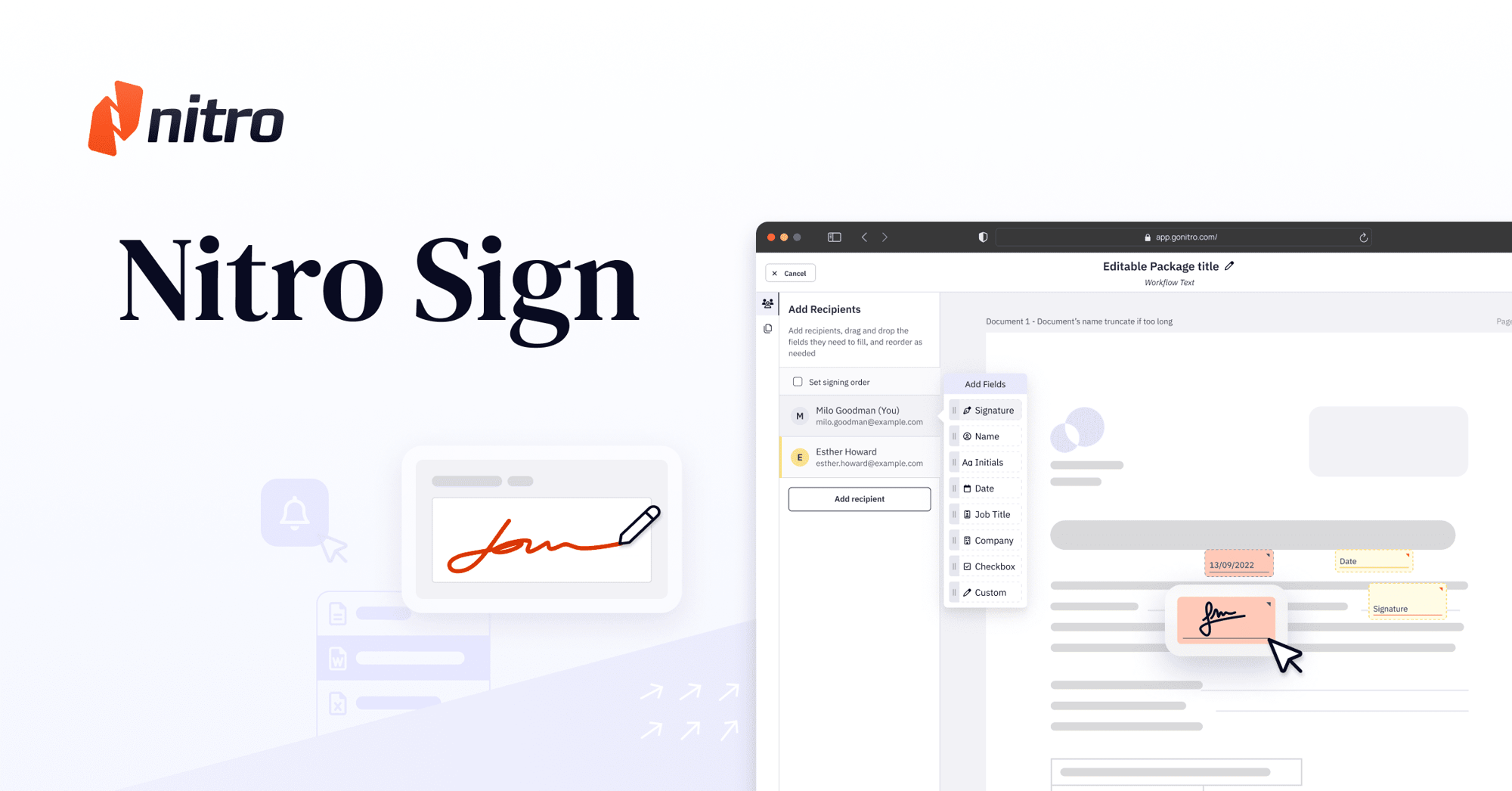
Nitro Sign User Guide
Browse articles, tutorials, and best practices to help your team use Nitro Sign more effectively and get the most from your electronic signature workflows.
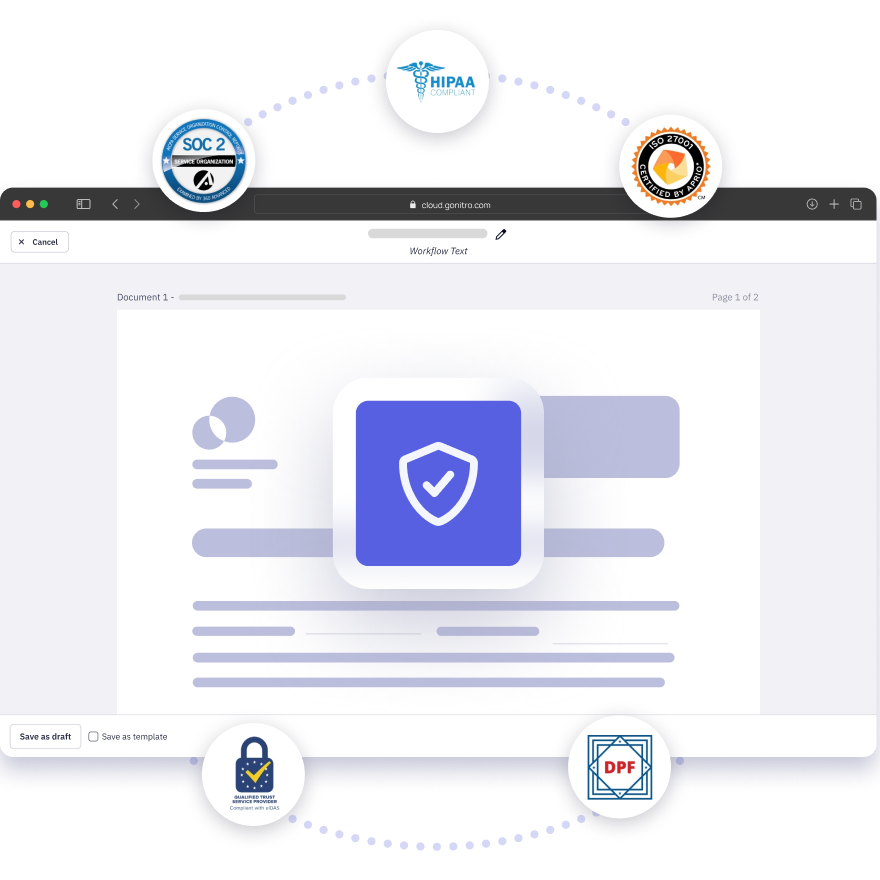
eSignature Legality Guide
Learn how electronic signatures work and how Nitro Sign supports compliance with the ESIGN Act, UETA, eIDAS, and other electronic signature requirements.
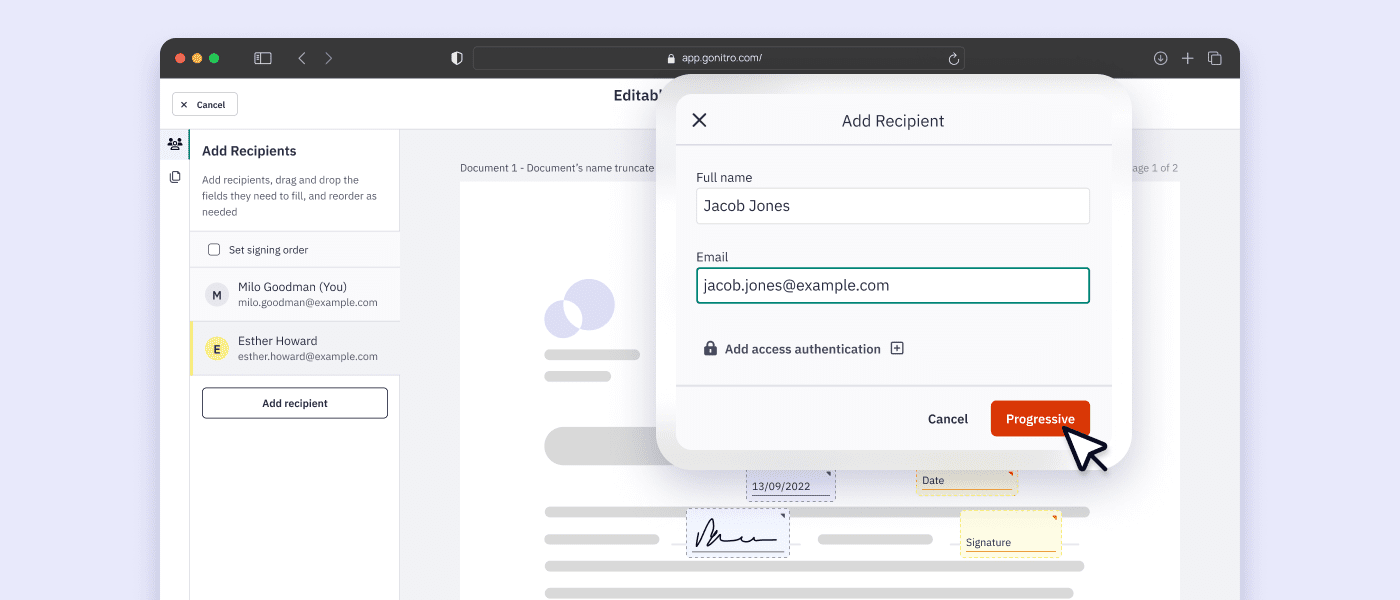
Signing Methods
Compare Nitro Sign's signing methods, identity verification, and authentication workflows to choose the right signing experience for your business.